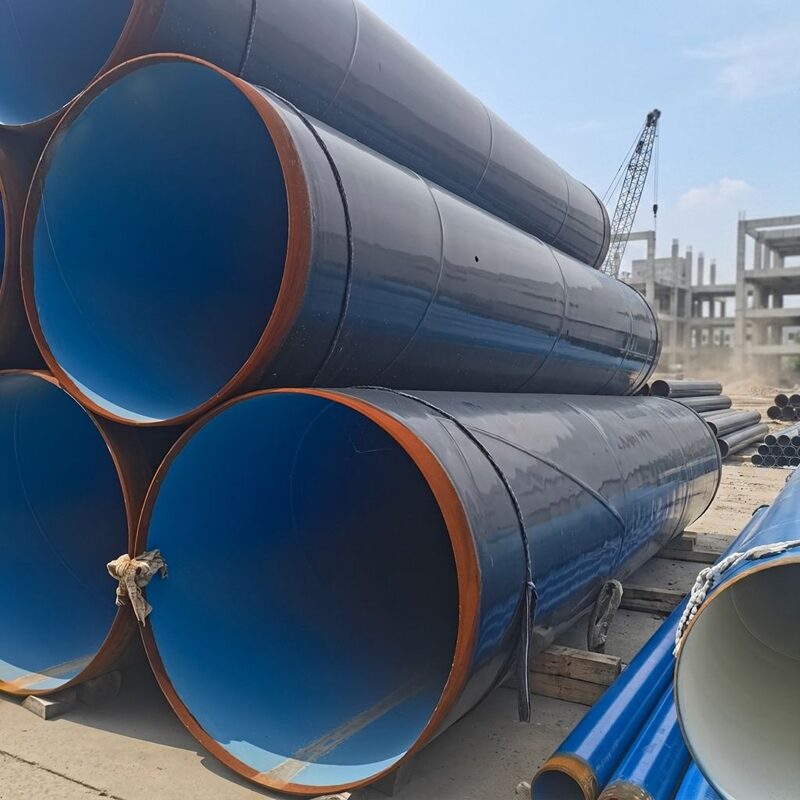
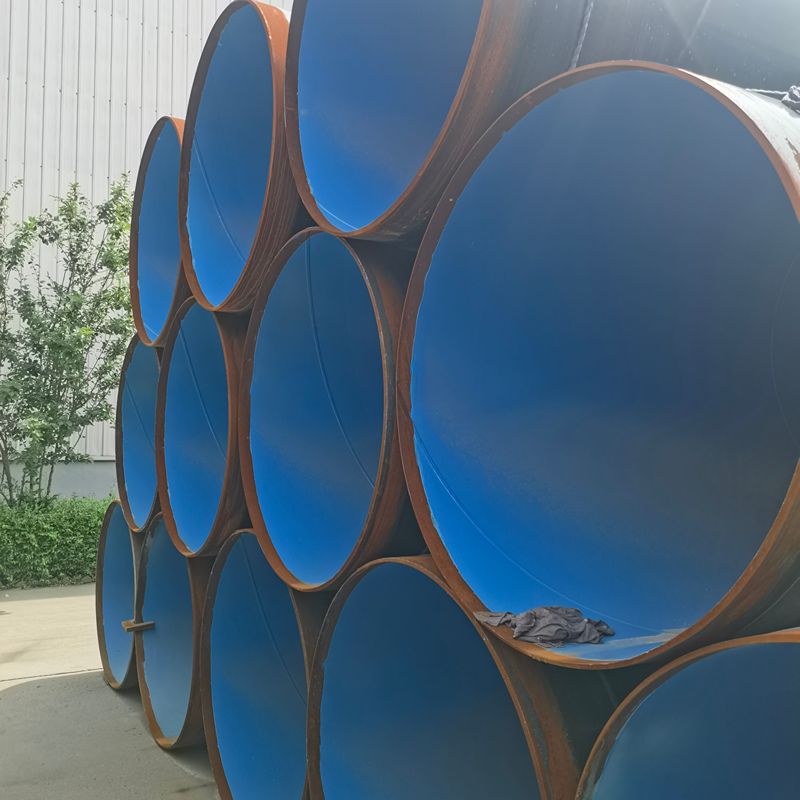
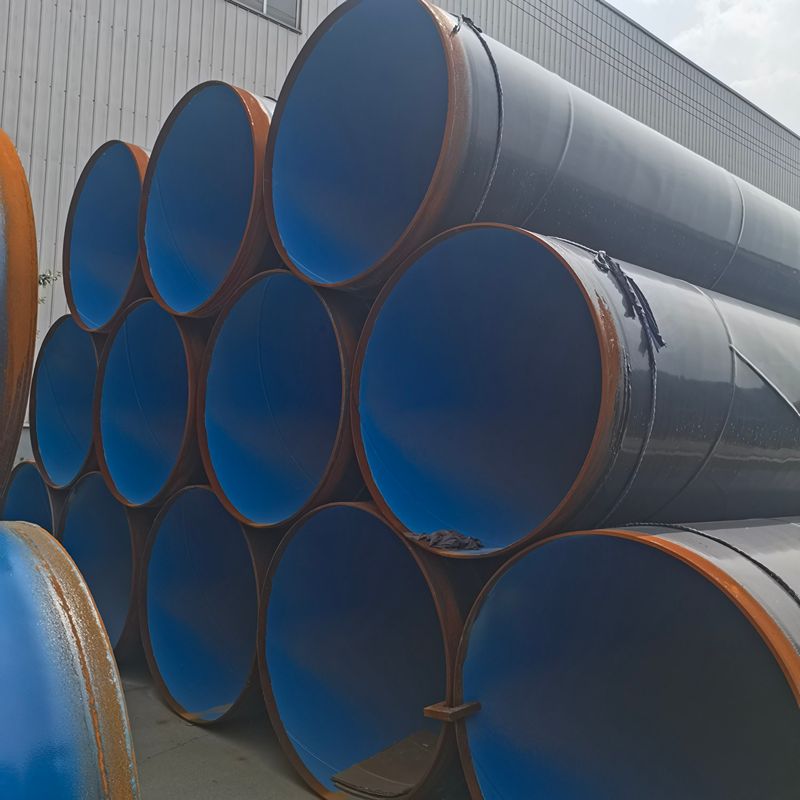
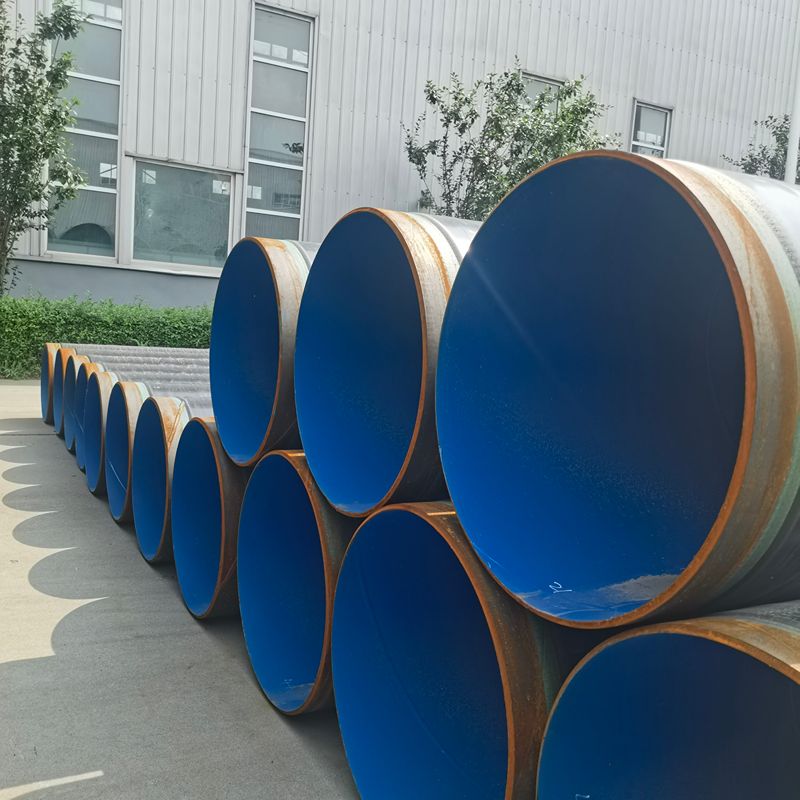
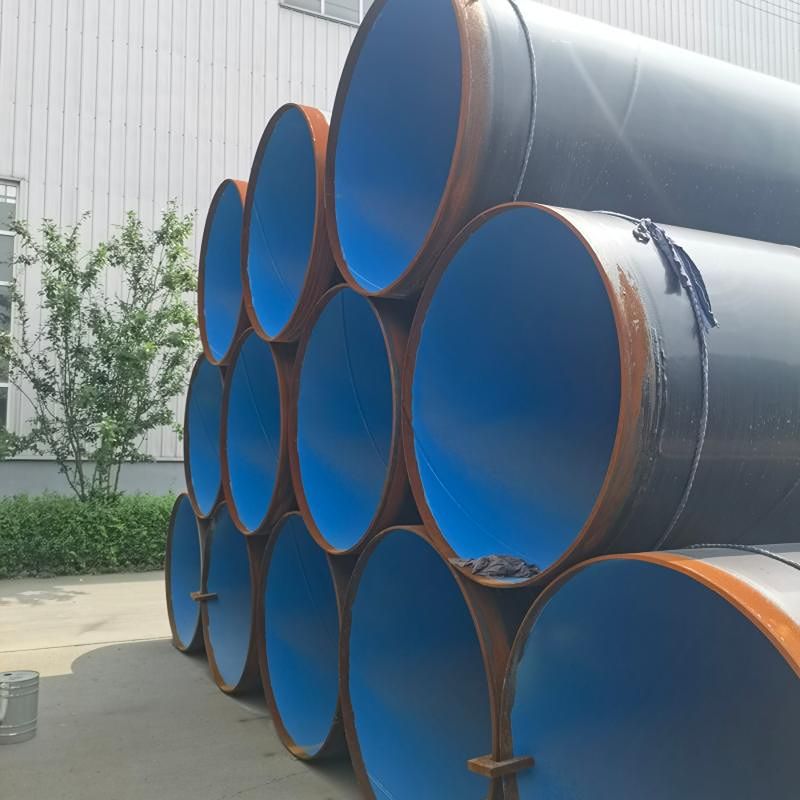
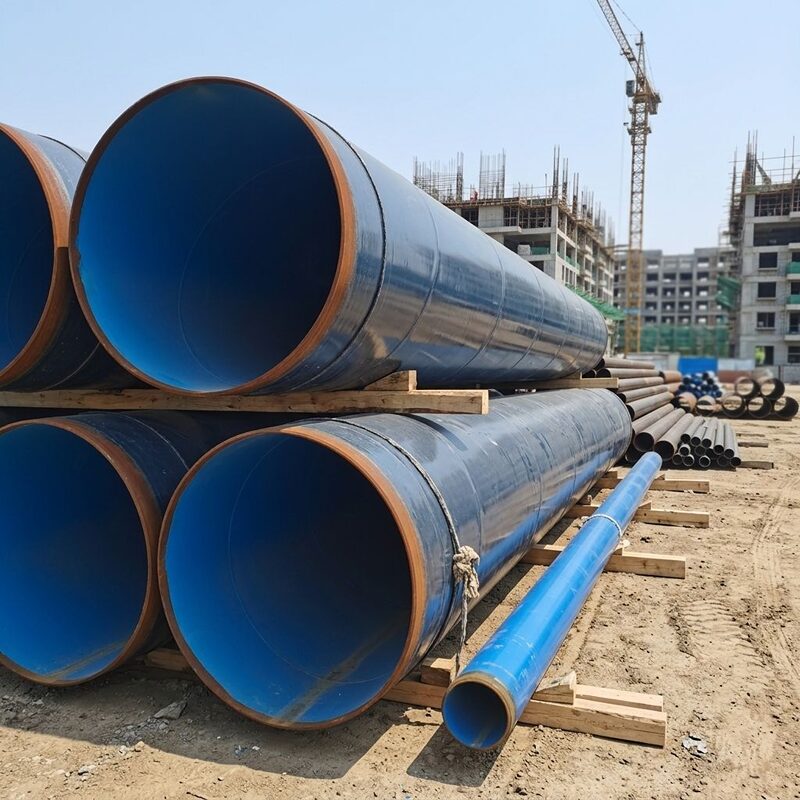
API 5L SSAW steel pipe with TPEP anti-corrosion coating is designed for pipeline projects that require a welded steel pipe structure combined with internal and external corrosion protection. Manufactured using the spiral submerged arc welding (SSAW) process, this type of pipe is suitable for consideration in oil, gas, water transmission, and industrial pipeline systems, subject to the applicable material and project requirements.
The TPEP coating system is commonly associated with an internal fusion-bonded epoxy coating and an external three-layer polyethylene coating. This combination is intended to protect the inner and outer steel surfaces against different service-related corrosion risks. The exact coating structure, materials, and thickness should be confirmed against the product specification before ordering.
For pipeline engineering and procurement, the steel pipe grade, outside diameter, wall thickness, coating configuration, operating conditions, and inspection requirements should be defined according to the intended application. Available options may include API 5L grades such as X42, X52, X60, and X70, where the product is manufactured and verified to meet the relevant requirements.
SSAW Spiral Welded Steel Pipe Manufacturing
Spiral submerged arc welded steel pipe is produced by forming steel strip into a spiral shape and joining the edges through submerged arc welding. This manufacturing method allows pipes to be produced in a range of diameters and wall thicknesses, depending on the available production equipment and the applicable technical specification.
The spiral weld is an important part of the pipe's structural integrity. Manufacturing controls and inspection requirements should therefore be established according to the specified pipe standard and project needs. For applications involving oil and gas transportation, buyers should confirm the required material grade, manufacturing requirements, dimensional tolerances, and testing documentation before placing an order.
The designation API 5L refers to a pipeline pipe specification. The actual compliance of a supplied pipe must be confirmed against the applicable edition, grade, product specification level, and purchase requirements. Listing API 5L in a product title alone does not establish certification or compliance.
TPEP Internal and External Corrosion Protection
TPEP anti-corrosion coating is used in pipeline applications where protection of both the internal and external steel surfaces is required. A commonly used configuration consists of fusion-bonded epoxy on the internal surface and a three-layer polyethylene coating on the external surface. The internal and external coating systems serve different purposes and should be evaluated according to the transported medium and surrounding environment.
The internal epoxy coating provides a protective barrier between the steel substrate and the transported fluid. Its suitability depends on factors such as fluid composition, operating temperature, flow conditions, and the coating manufacturer's technical specifications.
The external polyethylene coating is designed to protect the steel surface from environmental exposure, including soil moisture and potentially corrosive conditions in suitable pipeline installations. Its performance depends on surface preparation, coating materials, application quality, thickness, handling, and installation practices.
For any specific TPEP product, buyers should verify the actual internal and external coating structure, thickness, adhesion requirements, and compatibility with the intended service conditions. The final configuration should be agreed in the technical specification.
Available Steel Grades and Specifications
Depending on the confirmed product range and manufacturing capability, the pipe may be specified in API 5L grades such as X42, X52, X60, and X70. These grade designations relate to the mechanical and material requirements defined by the relevant pipeline specification. They should not be treated as interchangeable, because the required grade depends on pipeline design, operating pressure, and project engineering.
Key details to confirm during procurement include:
- Required API 5L grade and applicable specification level
- Outside diameter and wall thickness
- Pipe length and dimensional tolerances
- SSAW manufacturing and weld inspection requirements
- Internal epoxy coating type and thickness
- External polyethylene coating structure and thickness
- Operating pressure, transported medium, and service temperature
- Required inspection, testing, marking, and documentation
- Order quantity, packaging method, and delivery destination
Providing these details helps align the supplied product with the engineering design and procurement requirements.
Applications in Oil, Gas and Water Pipelines
API 5L SSAW steel pipe with TPEP coating can be considered for oil and gas pipeline infrastructure, long-distance water transmission, industrial fluid transportation, and other pipeline projects requiring internal and external corrosion protection.
For oil and gas applications, the pipe material, grade, manufacturing quality, and coating system must meet the applicable project requirements. For water transmission, the internal coating must be suitable for the transported water and the relevant service conditions. Where drinking water is involved, applicable potable-water requirements for the complete pipe system should be confirmed separately.
Pipeline operating conditions can vary significantly between projects. Selection should account for pressure, temperature, fluid characteristics, installation environment, and applicable regulations. The final pipe and coating combination should be approved against the project's technical specification.
Quality Control and Inspection
Quality assurance should cover both the steel pipe and the coating system. Depending on the applicable standard and agreed purchase specification, inspection may include dimensional checks, visual examination, material verification, weld-related inspections, and specified mechanical or non-destructive testing.
Coating inspection may include checks of surface preparation, coating thickness, appearance, adhesion, and other project-defined properties. Test methods and acceptance criteria should be agreed before production. Any certificates or inspection reports should be confirmed with the supplier and should correspond to the actual supplied product.
After coating application, appropriate storage, lifting, loading, and transportation procedures help minimize avoidable coating damage. The coating condition should be checked before installation, and any repairs should follow an approved procedure.
Packaging, Delivery and Ordering
Packaging arrangements can be selected according to pipe dimensions, order quantity, transportation method, and destination requirements. Suitable handling and support measures help reduce the risk of damage during inland transportation, sea freight, loading, and unloading.
To request a quotation, buyers should provide the required steel grade, outside diameter, wall thickness, pipe length, internal and external coating specifications, quantity, destination, and any special inspection or documentation requirements. Drawings or project specifications can also be submitted for technical review.
By confirming the pipe standard, steel grade, coating configuration, operating conditions, and inspection criteria in advance, buyers can evaluate the suitability of API 5L SSAW TPEP coated steel pipe for their oil, gas, water, and industrial pipeline projects.
Applications:
- Oil Transportation Pipelines: For oil pipeline systems requiring specified steel grades and internal and external corrosion protection.
- Natural Gas Transmission: For suitable gas pipeline projects where the pipe grade, manufacturing requirements, and coating system meet the project specification.
- Long-Distance Water Transmission: For water transportation infrastructure requiring protective coatings on the internal and external pipe surfaces.
- Municipal Water Supply Networks: For suitable water supply projects subject to applicable material, lining, and regulatory requirements.
- Industrial Fluid Transportation: For industrial pipeline systems transporting fluids under defined operating conditions.
- Buried Pipeline Infrastructure: For underground pipeline installations exposed to soil moisture and potentially corrosive environments.
- Energy and Pipeline Construction: For new pipeline construction, infrastructure expansion, and related engineering projects requiring SSAW steel pipes with specified coating systems.
Advantages:
- SSAW Spiral Welded Construction: Provides a welded steel pipe option for pipeline projects requiring specified diameters, wall thicknesses, and mechanical properties.
- TPEP Internal and External Protection: A typical TPEP configuration combines an internal fusion-bonded epoxy coating with an external three-layer polyethylene coating, subject to product specification.
- Internal Corrosion Protection: The internal epoxy coating helps protect the steel surface from the transported medium when correctly selected for the service conditions.
- External Corrosion Protection: The external polyethylene coating helps protect the pipe against environmental exposure in suitable pipeline installations.
- Multiple Steel Grade Options: X42, X52, X60, and X70 may be specified where available and compliant with the applicable pipe standard.
- Project-Based Customization: Outside diameter, wall thickness, pipe length, steel grade, and coating requirements can be defined according to project needs.
- Quality Inspection Options: Pipe dimensions, weld quality, coating thickness, adhesion, and other inspection requirements can be agreed before production.
- Flexible Packaging and Delivery: Packaging and transportation arrangements can be coordinated according to pipe dimensions, order quantity, and destination.
FAQ:
Q1: What is the minimum order quantity for 3LPE coated steel pipe?
A: The minimum order quantity is 1 ton. Please confirm the required pipe specifications and quantity with us before placing an order.
Q2: What is 3LPE coating?
A: 3LPE stands for three-layer polyethylene coating. It generally consists of a fusion-bonded epoxy primer, an adhesive layer, and a polyethylene outer layer designed to protect the external steel surface against corrosion.
Q3: Is API 5L steel pipe available with 3LPE coating?
A: API 5L steel pipe with 3LPE coating can be discussed according to the required grade, applicable standard, and confirmed manufacturing scope. Please provide your technical specifications for verification.
Q4: Can pipe dimensions and coating specifications be customized?
A: Pipe dimensions, wall thickness, length, and coating requirements can be reviewed according to project needs and actual manufacturing capabilities. Please send your required specifications for confirmation.
Q5: What applications are suitable for 3LPE coated steel pipe?
A: Depending on the pipe grade, coating specification, and service conditions, it can be considered for suitable oil, gas, water transmission, underground pipeline, and industrial pipeline projects.
Q6: What quality inspections are available?
A: Inspection items depend on the agreed technical specification. They may include dimensional checks, visual inspection, coating thickness, coating continuity, adhesion, and other applicable tests. Available inspection records and documents should be confirmed before ordering.
Q7: How can I obtain a quotation?
A: Please provide the required steel grade, outside diameter, wall thickness, pipe length, quantity, coating specification, and delivery destination. Drawings or technical documents are also helpful for preparing a project-specific quotation.
Q8: How is the pipe packaged for transportation?
A: Packaging is arranged according to pipe dimensions, coating protection requirements, shipping method, and destination. Please share your delivery requirements so the suitable packaging and logistics arrangements can be discussed.
Tianjin Kaiyide Pipeline Technology Co., Ltd. is an established manufacturer specializing in coated and anti-corrosion steel pipe products. With a 38,000 m² site and 15,000 m² of building area, the company integrates product development, manufacturing, quality control and sales to provide reliable piping solutions for industrial and infrastructure applications.